
Taking care of your mental health doesn’t have to be complicated, extreme, or overwhelming.
For many people, mental health advice feels like another list of things they’re failing at — meditate more, sleep better, eat perfectly, think positively. No wonder it’s exhausting.
The truth is, supporting your mental health is less about fixing yourself and more about learning how to care for your mind and nervous system in ways that actually work for you.
This list isn’t about perfection or pressure. It’s about practical, steady support — the kind you can return to on good days, hard days, and everything in between.
Here are ten foundational ways to take care of your mental health, starting right where you are.
1. Nutrition Is KEY
What you eat doesn’t just affect your body — it affects your mind, too. Food can play a significant role in anxiety, mood, and energy levels.

Try this simple experiment:
For a set amount of time (ideally a month), reduce or limit:
Sugar
Caffeine
Simple carbohydrates
Highly processed foods
Red meat
Artificial sweeteners
Each evening, jot down how you feel — mentally, emotionally, physically. By the end, many people notice surprising improvements in anxiety, mood stability, and overall energy.
Diet is often overlooked in anxiety management, and honestly, that’s tragic. It’s one of the most powerful tools we have.
If changing everything at once feels overwhelming, start small. Eliminate one or two items at a time and build from there. Even gradual changes can create noticeable shifts. Food is powerful — and so is your body’s response to it.
2. Sleep Is Non-Negotiable
I can’t overstate this: sleep is critical for mental health. It’s not optional, and it’s not something you can consistently skimp on without consequences.
Research shows that sleep — especially REM sleep — plays a vital role in emotional regulation. During sleep, the brain resets, processes emotions, and prepares you to function the next day.
In plain terms?
Without quality sleep, your brain doesn’t get the reboot it needs. And when your brain is exhausted, anxiety has a much easier time taking over.
Protect your sleep like your mental health depends on it — because it does.
3. Find a Supportive Circle
Community matters. The people you spend time with influence your mindset, your nervous system, and your emotional health more than you may realize.
Not all friendships are equal. Some people unintentionally keep us stuck in anxiety, negativity, or self-doubt.
The people you want around you are those who:
Face reality without dwelling in it
Choose growth over stagnation
Lift others up
See you in the middle of your mess and reach out anyway
When you consistently surround yourself with people like this, something shifts. Your energy changes. Your confidence grows. You feel the difference — and it’s powerful.

4. Learn to Manage Stress
Stress will always exist. Learning how to manage it is a life skill — not just an anxiety tool.
There’s no shortage of effective techniques:
Mindfulness
Movement
Breathing exercises
Progressive Muscle Relaxation (PMR)
Guided visualization
Guided visualization is a personal favorite of mine, especially when paired with breathing and PMR. Being gently guided into a calm mental space allows your nervous system to fully let go — and that relief is real.
And don’t underestimate hobbies. Doing something you enjoy — coloring, doodling, crafting, listening to music — can significantly lower stress. Even coloring apps on your phone can help regulate your nervous system in the moment.
5. Water (Yes, All of It)
Drink it. Sit near it. Swim in it.
Hydration is essential for brain health. Even mild dehydration can worsen anxiety symptoms, brain fog, fatigue, and emotional instability.
Dehydration symptoms can mimic panic attacks, including:
Headaches
Lightheadedness
Increased heart rate
Shallow breathing
Brain fog
Muscle weakness
Before assuming anxiety is spiraling, check in with your body. Sometimes the solution is as simple as drinking water.
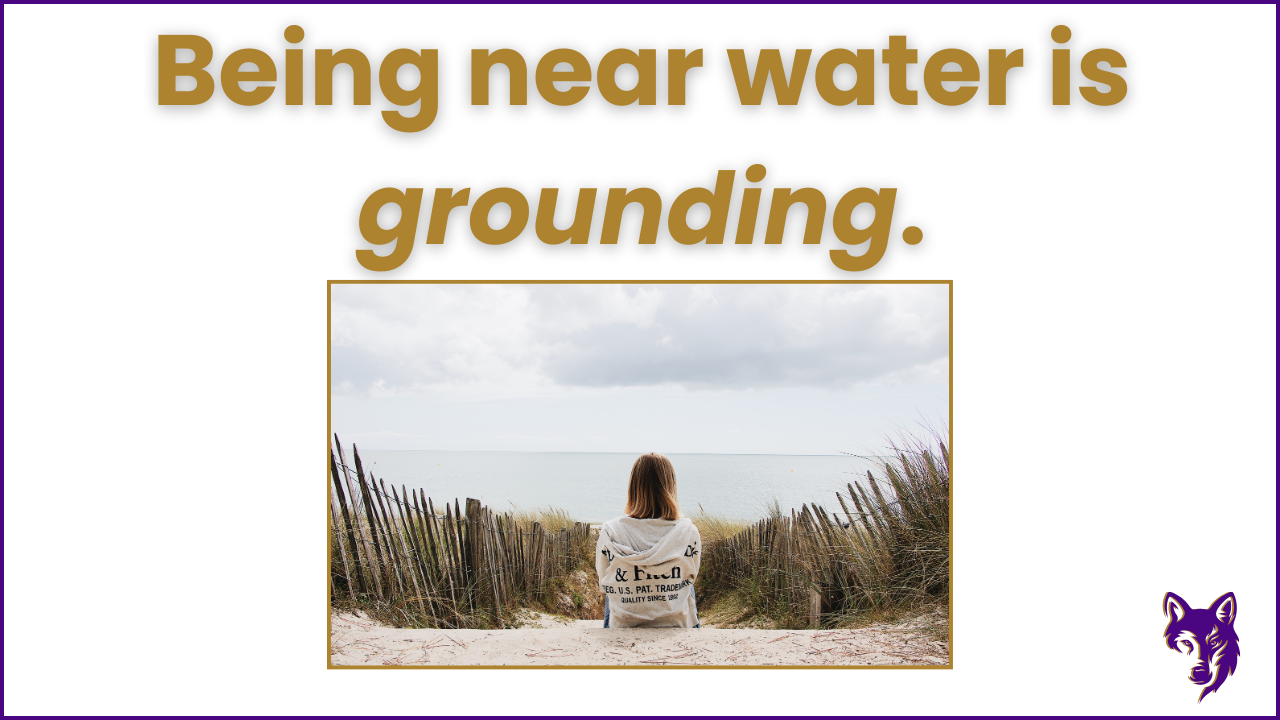
And being near water? That’s grounding in its own right. Our nervous systems respond deeply to it — especially anxious ones.
6. Therapy Can Be Powerful
Talk therapy is one of the most underappreciated forms of self-care.
Sometimes life gets tangled. Thoughts, emotions, experiences — all knotted together. A good therapist helps you gently unravel those knots, decide what can change, what needs acceptance, and what might become a goal.
While therapy alone isn’t always a complete anxiety solution, it can be incredibly valuable. Cognitive Behavioral Therapy (CBT) works well for some. Personally, I’m a strong advocate for Acceptance and Commitment Therapy (ACT), which focuses on learning to live fully with anxiety rather than fighting it.
ACT-trained therapists can be harder to find, but they’re becoming more common — and worth seeking out if it resonates with you.
7. Be Honest About Alcohol
I’m not talking about an occasional drink.
I’m talking about the drinks used to cope — the ones meant to take the edge off a hard day or numb emotions you don’t want to feel.
Those are the dangerous ones.
Alcohol and anxiety don’t mix well. What feels like relief is temporary, and often followed by increased anxiety, panic attacks, and emotional crashes. Over time, alcohol actually lowers serotonin levels — making anxiety worse, not better.
If alcohol has become a way to avoid feeling, it’s worth taking a compassionate, honest look at that pattern.

8. Practice Commitment
Commitment is a core principle of Acceptance and Commitment Therapy — and it’s powerful.
For mental health, commitment simply means following through on what matters to you.
That might look like:
Committing to healthier habits
Practicing exposure to feared situations
Showing up for therapy
Creating structure
Choosing values-based actions
There’s no “right” commitment — only the one that matters to you. Choose something meaningful and follow through. That act alone builds confidence and stability.
9. Set (and Defend) Boundaries
Boundaries protect your mental health.
They tell people how they’re allowed to treat you. Without them, others may unintentionally drain you, trigger anxiety, or take advantage of your kindness.
Boundaries aren’t about control — they’re about self-respect.
If someone consistently ignores your needs, pressures you to say yes, or leaves you feeling depleted, that’s information. You’re allowed to define what’s acceptable and step away when it’s not respected.
Every boundary you set is a message to yourself: I matter.
10. Talk About It
We still haven’t fully normalized mental health conversations — and we need to.
Mental health is no different than physical health. Silence only creates shame. Openness creates connection.
When you talk about your experiences, you don’t just help yourself — you help others feel less alone. Healing happens in the light, not the shadows.
A Final Thought
This list isn’t exhaustive — but it’s a strong place to start.
Try one. Try a few. Try what feels doable. Any investment in your mental health matters.
You’ve got this.
You can do this.
And I’m really glad you’re here.
