
We use the word obsession casually.
We’re obsessed with a new perfume.
Obsessed with a show.
Obsessed with a person we adore.
But if you’re here reading this, obsession likely means something very different.
Something heavier.
Something scarier.
Obsessions, in the clinical sense, are unwanted thoughts.
That definition is simple—but the experience is anything but.
These thoughts arrive uninvited. They repeat. They linger.
And they often come with a surge of fear so intense it feels impossible to ignore.
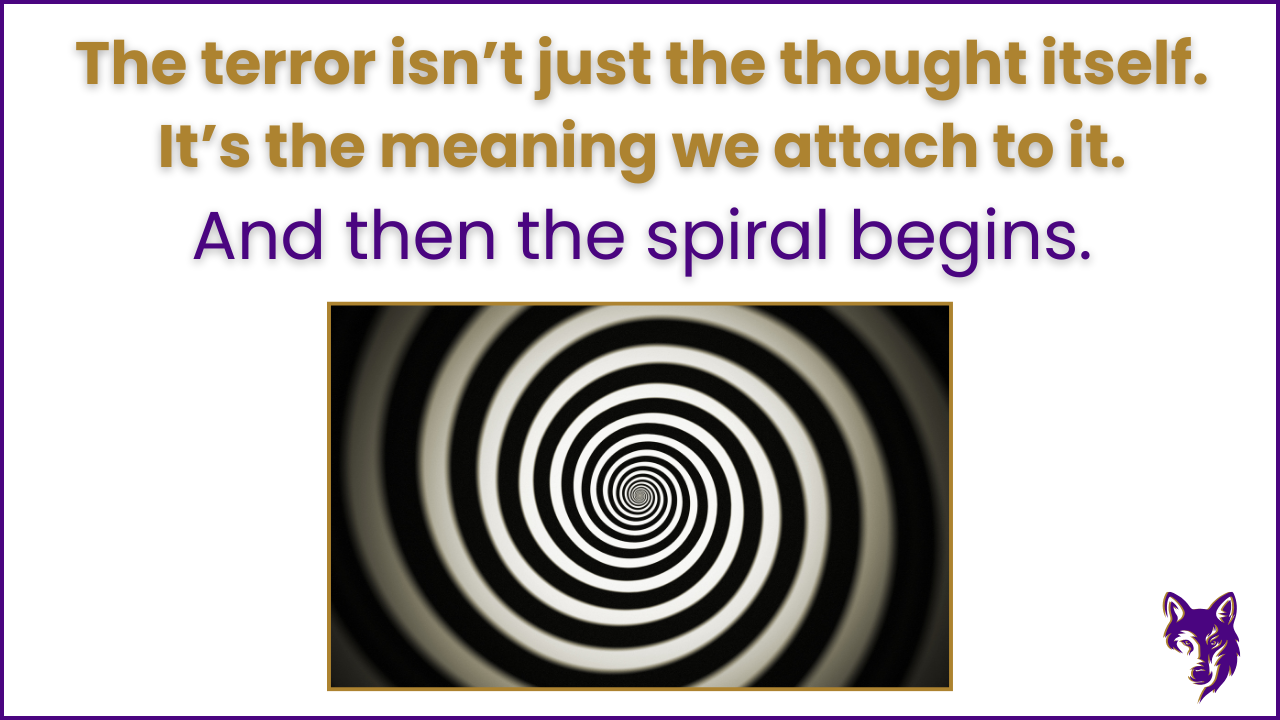
The terror isn’t just the thought itself.
It’s the meaning we attach to it.
What if this thought means something about me?
What if I want this?
What if I lose control?
And then the spiral begins.
The Thoughts No One Wants to Admit Having
People rarely talk openly about the content of intrusive thoughts—especially the most disturbing ones—because they’re afraid of what those thoughts might say about them.
Thoughts like:
What if I suddenly lose control while driving?
What if I hurt someone I love?
What if I snap one day?
What if I’m secretly dangerous?
These are the kinds of thoughts that don’t just cause anxiety—they cause deep shame.
They make people question their character, their safety, their sanity.
And yet, these thoughts are a well-documented part of Obsessive Compulsive Disorder (OCD)—specifically the obsessive (intrusive thought) side of it.
When most people think of OCD, they picture visible compulsions:
excessive cleaning, checking, counting, repeating.
But obsessions are just as real—and often far more isolating.
Intrusive thoughts are OCD.
And the compulsions that follow them are often invisible:
reassurance-seeking, avoidance, mental checking, hiding objects, refusing to be alone, scanning your own thoughts for “proof.”
When No One Was Talking About This
Twenty years ago, I lived with intrusive thoughts—and almost no one was talking about them.
There was no reassurance online.
No nuanced conversations.
No gentle explanations.
So I did what many people did back then:
I hid them.
I avoided being alone.
I avoided certain situations.
I sought constant reassurance.
I tried to control my environment so the thoughts couldn’t “win.”
And beneath all of that was a single, exhausting fear:
What if this means I’m actually capable of doing something horrible?
I understood, intellectually, that many people have strange or violent thoughts.
But knowing that didn’t quiet the panic.
Because what if I was different?
What if I was the exception?
That fear alone can hijack a life.

The Reframe That Changed Everything
Years later, I encountered a concept that completely altered how I understood intrusive thoughts:
Intrusive thoughts almost always target what you value most.
They don’t reflect desire.
They reflect fear of loss.
They show up precisely because you care deeply.
When I saw my thoughts through that lens, something shifted.
The thoughts weren’t evidence of danger.
They were evidence of love.
OCD is an anxiety disorder—and anxiety is remarkably clever.
It uses whatever matters most to get your attention.
Understanding that didn’t make the thoughts vanish.
But it removed their authority.
They no longer got to define me.
Thoughts Are Not Instructions
One of the most damaging beliefs people with intrusive thoughts carry is this:
If I think it, it must mean something.
But thoughts are not plans.
They are not intentions.
They are not desires.
They are mental events.
Acceptance and Commitment Therapy (ACT) was instrumental in my healing because it taught me something radical:
Thoughts don’t need to be fixed, replaced, or neutralized.
They need to be allowed.
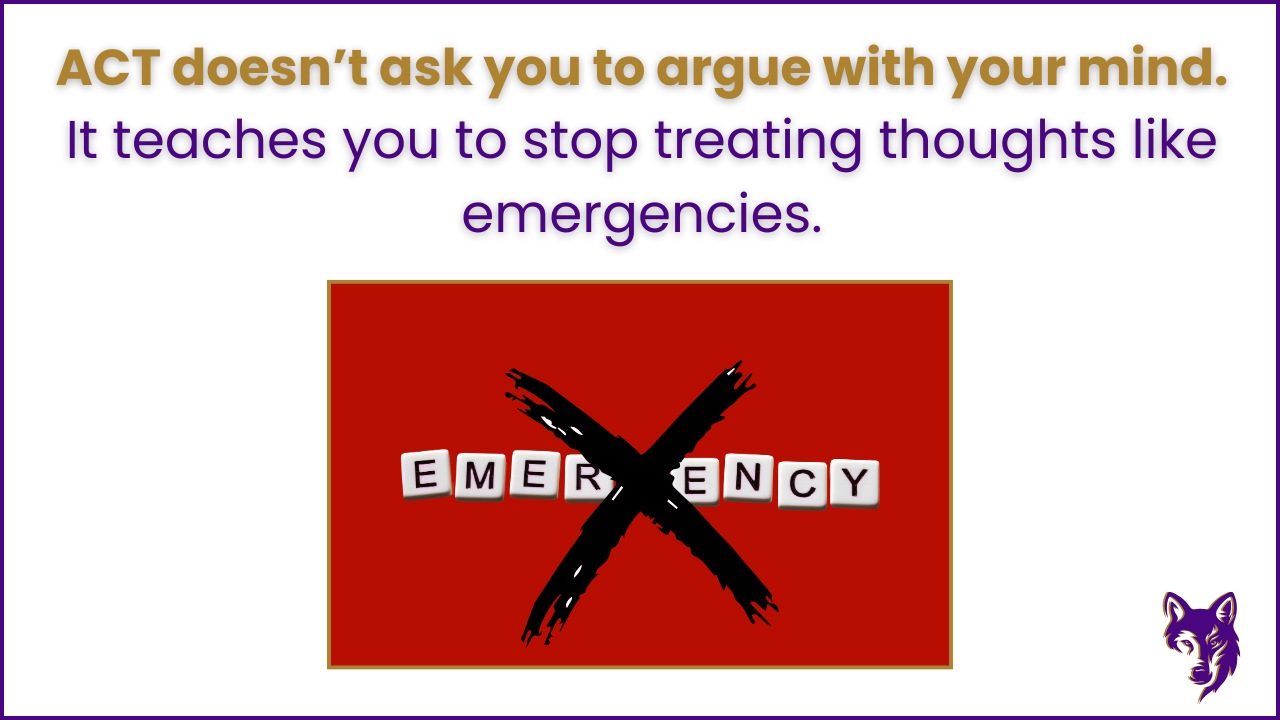
ACT doesn’t ask you to argue with your mind.
It teaches you to stop treating thoughts like emergencies.
You learn to notice them.
Allow them.
And continue living according to your values—not your fear.
The Work Is Not What People Expect
The work of healing intrusive thoughts isn’t about control.
It’s about non-engagement.
No reassurance.
No mental debates.
No avoidance rituals.
Just staying present.
Letting the discomfort rise and fall.
And choosing not to let fear make your decisions.
This isn’t easy.
And it isn’t quick.
But it works.
Over time, the thoughts lose their charge.
And eventually, they lose your attention.
If This Is You, Please Hear This
You are not dangerous.
You are not broken.
You are not alone.
Intrusive thoughts are a symptom of anxiety—not a reflection of character.
They feel unbearable because they target what matters most.
That doesn’t make you weak.
It makes you human.
You can live a full, meaningful life—even with these thoughts present.
You got this.
You can do this.
And I’m really glad you’re here.
