
Self-care has become one of the most misunderstood concepts of our time.
Everywhere you look, you’re told to “make self-care a priority,” and that part is absolutely true — taking care of yourself is not a luxury, it’s a necessity.
But the confusion isn’t about whether self-care matters.
It’s about what self-care actually is.
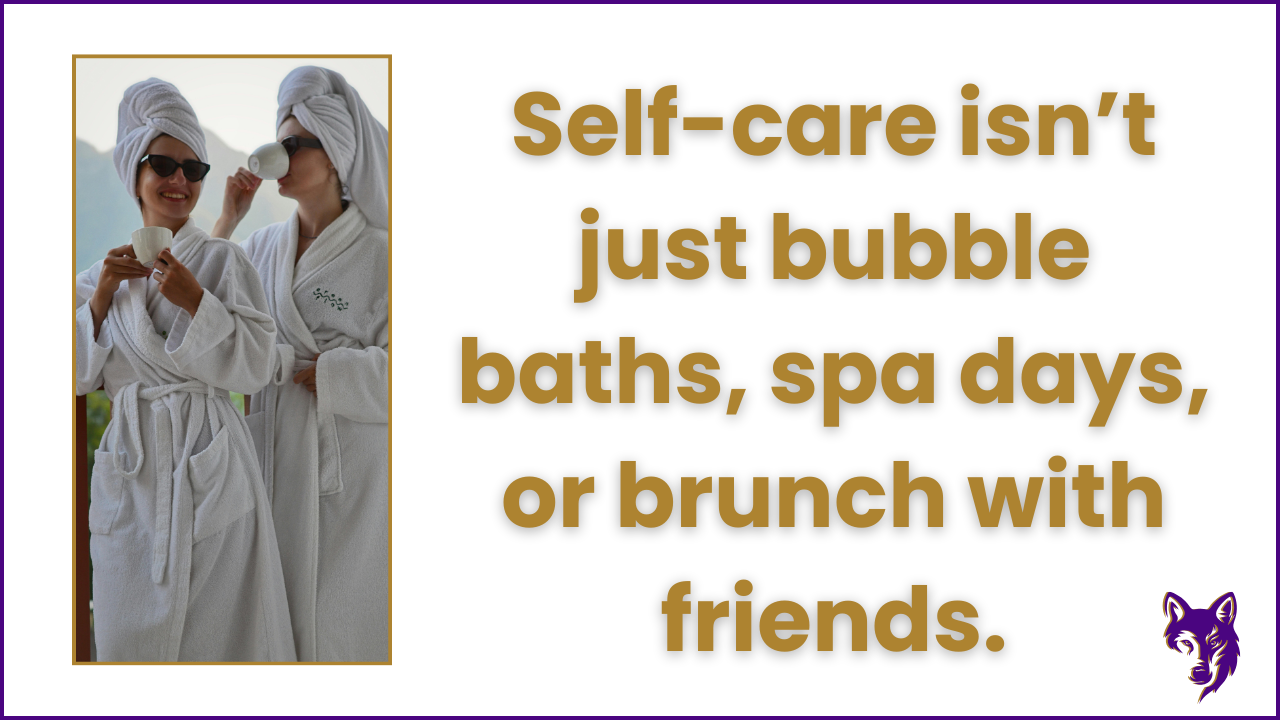
Self-care isn’t just bubble baths, spa days, or brunch with friends.
Those things can be lovely, and they do have a place — but they are not the whole picture.
Real self-care isn’t always pretty.
It isn’t always easy.
And it definitely isn’t always fun.
Sometimes, real self-care looks like:
Setting boundaries — and holding them, even when it’s uncomfortable
Getting enough sleep consistently, not just “when you can”
Moving your body because your nervous system needs it
Letting go of people who drain you, even when that hurts
That’s the part of self-care no one really wants to talk about.
And yet, it’s often the part that makes the biggest difference.
You absolutely deserve rest.
You deserve joy.
You deserve indulgence and ease.
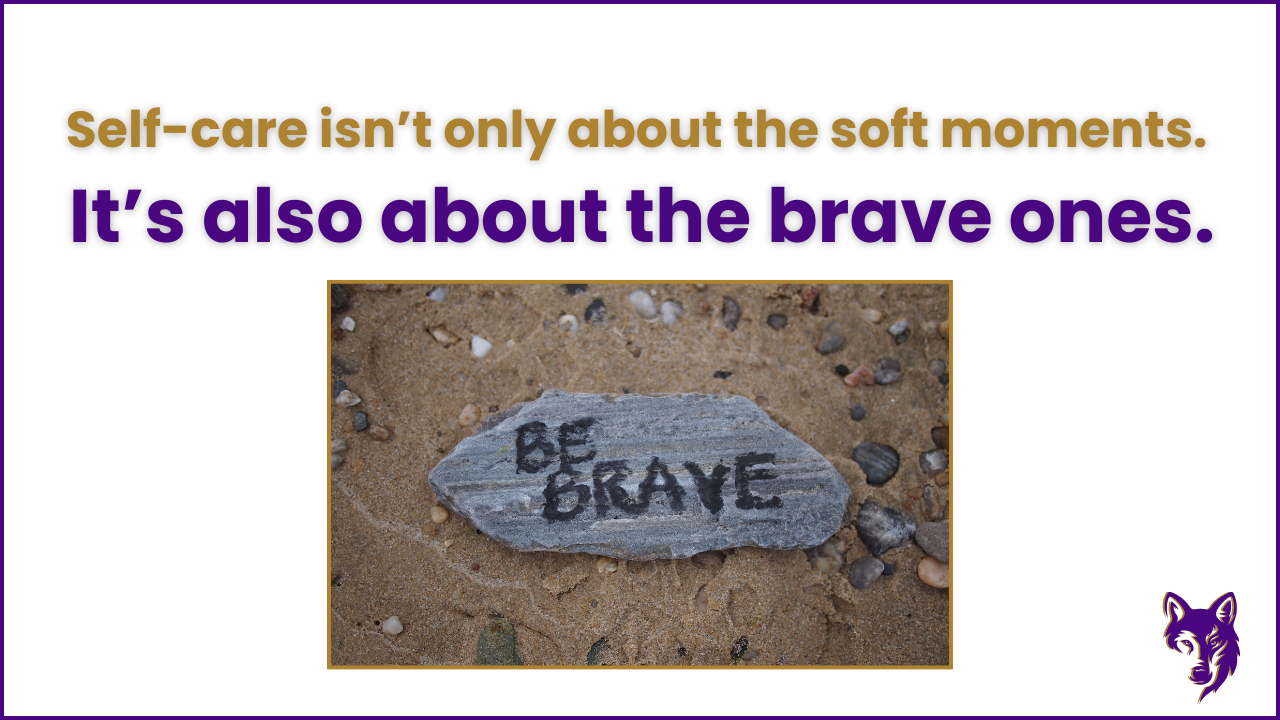
But self-care isn’t only about the soft moments — it’s also about the brave ones.
It’s about doing the things that support your whole self, even when they require effort, honesty, or grief.
When Self-Care Means Letting Go
Let’s talk about something very real.
Imagine you have a friend — let’s call her Jane.
You’ve known Jane forever. On the surface, nothing seems obviously wrong. But every time you spend time with her, you leave feeling drained, second-guessing yourself, or quietly smaller.
Her comments are subtle.
Her digs are disguised as jokes.
And you always walk away wondering if you’re being “too sensitive.”
Anxiety loves people like Jane.
It feeds on insecurity, doubt, and emotional residue — and every interaction leaves the door wide open for anxiety to do what it does best.
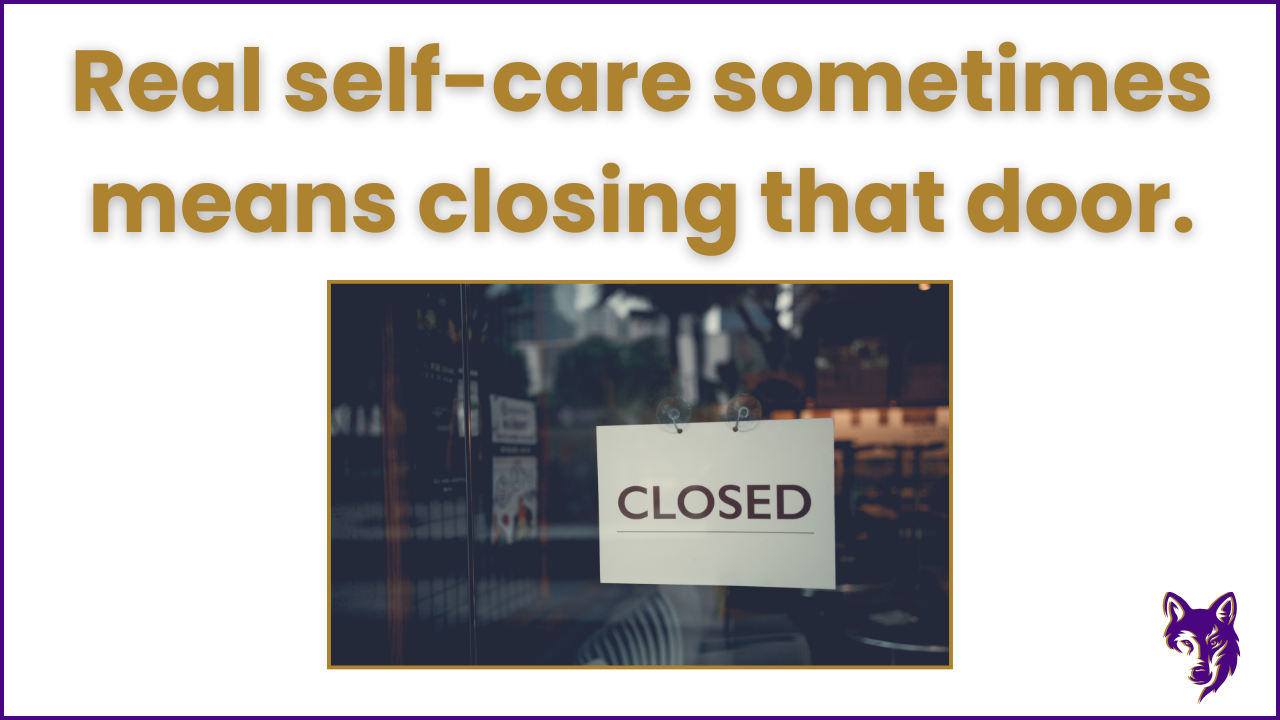
Real self-care sometimes means closing that door.
Even when it’s painful.
Even when it’s complicated.
Even when the person has been in your life for a long time.
Loving yourself means protecting your space.
And yes — that can be heartbreaking.
But it can also be life-changing.
What Real Self-Care Can Look Like
Self-care isn’t an either/or.
It’s an and.
It can be hard and gentle.
Serious and playful.
Protective and nourishing.
Here are some examples of real self-care that actually support anxiety:
Drinking enough water
Getting outside and into sunlight
Prioritizing sleep
Reducing sugar, alcohol, and overstimulation
Taking medication consistently if prescribed
Asking for help instead of pushing through
Letting go of perfectionism
Creating supportive routines
Limiting social media when it dysregulates you
Refusing toxic positivity
Choosing relationships that feel safe and mutual
Using vacation and mental health days
Practicing mindfulness and grounding
Deepening your faith, if that’s meaningful to you
And yes — also:
Reading
Creating art
Laughing
Taking long baths
Doing things that bring joy
Real self-care includes all of it.
Why This Matters for Anxiety
Anxiety feeds on neglected needs.
When you ignore boundaries…
When you override exhaustion…
When you stay in environments that drain you…
Anxiety doesn’t just show up — it thrives.
Self-care isn’t about fixing yourself.
It’s about supporting your nervous system and your life in ways that make anxiety less necessary.
And that kind of care?
It’s not selfish.
It’s responsible.
It’s leadership.
You are worth the effort.
You are worth the discomfort of growth.
And you are absolutely capable of creating a life that feels steadier, safer, and more aligned.
You’ve got this.
You can do this.
And I’m so glad you’re here.
