
Holding space. Making space. Creating space.
They’re phrases we hear more and more often — and for good reason. There’s something quietly powerful about them. Even saying the words feels like a pause. A softening. A moment where everything doesn’t have to be solved right now.
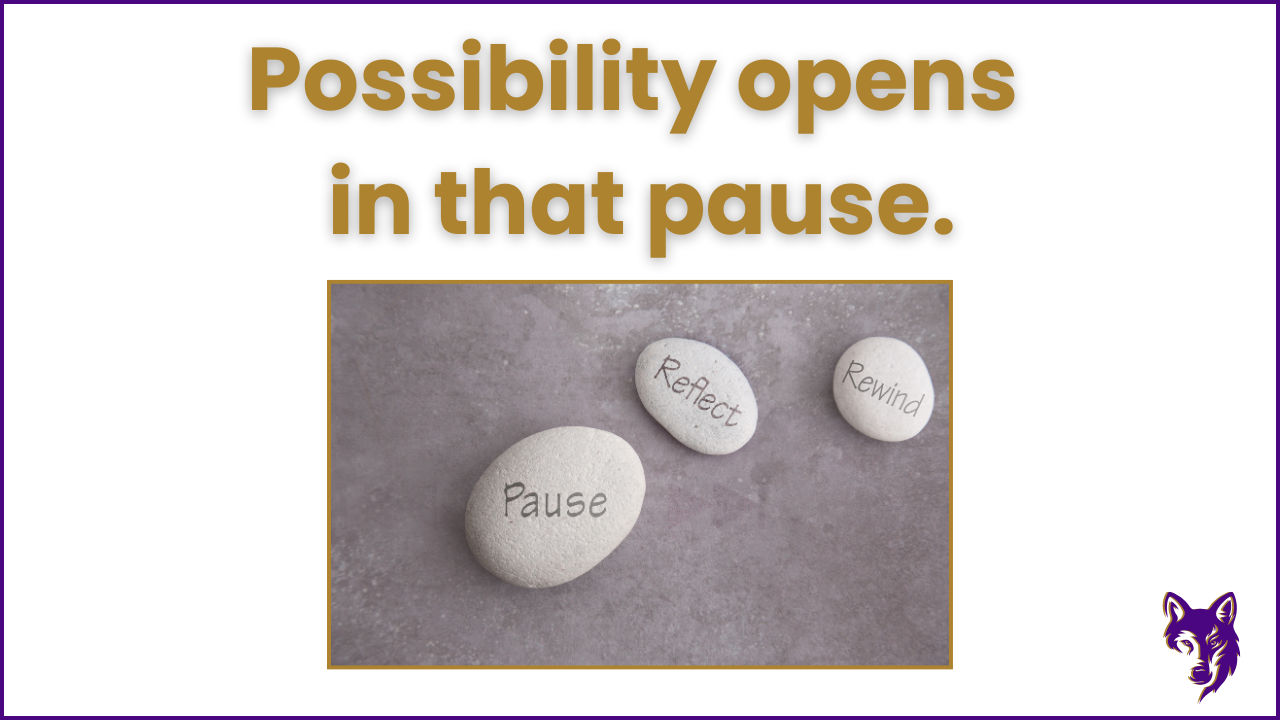
And possibility opens in that pause.
When we say we’re “holding space” for someone, we mean we’re allowing them to be fully themselves — without judgment, correction, dismissal, or urgency. We’re offering presence instead of pressure. Safety instead of solutions.
That kind of care is rare. And it’s beautiful.
But here’s the question I want to gently ask:
If we’re learning how to hold space for others…why don’t we do the same for ourselves?
What Holding Space for Yourself Actually Means
Holding space for yourself doesn’t mean indulging every thought or feeling. It doesn’t mean agreeing with anxiety or giving it control.
It means this:
Stepping back from automatic reactions
Pausing before judging yourself
Allowing thoughts and sensations to exist without immediately labeling them as dangerous, wrong, or bad
So much of what we think, feel, and believe happens on autopilot. Automatic judgments. Automatic fears. Automatic meanings we rarely stop to question.
Holding space is the moment you do stop.
It’s the moment you ask:
What if this isn’t exactly what I think it is?
That question alone can change everything.
Why This Is So Hard (And Completely Normal)
Our brains love efficiency. They love shortcuts. They love repetition.
That’s how neural pathways form.
Every time you react to a thought the same way — every time a sensation is labeled as dangerous, every time fear triggers avoidance — your brain strengthens that pathway. It learns:
“Ah. This again. I know what to do.”
This isn’t weakness. It’s biology.
But here’s the part most people don’t realize: just because a pathway exists doesn’t mean it’s accurate.
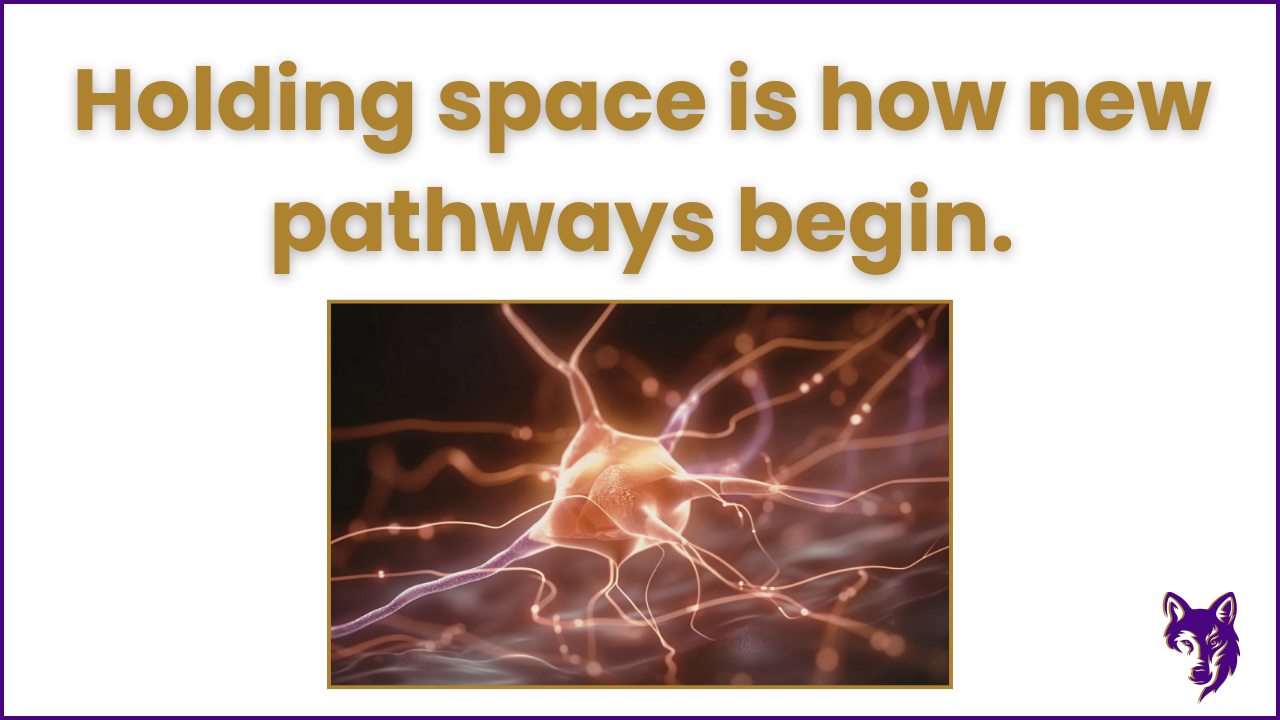
Holding space is how new pathways begin.
What Holding Space Looks Like in Real Life (Especially with Anxiety)
Let’s make this practical.
Imagine the beginning of a panic response. You notice a familiar sensation — dizziness, tightness, a racing heart. Your brain immediately jumps to what it always jumps to:
“This is dangerous. I need to escape.”
Holding space doesn’t mean pretending you feel fine.
It means pausing long enough to consider something new:
“I can feel this… without acting on it.”
You may feel like you’re going to pass out — but feelings aren’t facts. You may feel unsafe — but feeling unsafe doesn’t mean you are unsafe.
Holding space is the space between sensation and reaction.
That space is where freedom grows.
Becoming Your Own Safe Place
Many people with anxiety rely on safety behaviors — needing a specific person nearby, avoiding certain situations, or escaping discomfort as quickly as possible.
Holding space gently challenges that pattern.
It allows you to notice:
I feel safer with someone nearby… and
I can learn to feel safe with myself
Safety doesn’t have to come from outside you forever.
With practice, you become the steady place.
Holding Space for a New Story About Yourself
Anxiety has a cruel way of attacking identity.
It whispers things like:
“You’re weak.”
“You can’t handle this.”
“Something is wrong with you.”
Holding space means refusing to accept those stories as truth.
What if anxiety doesn’t mean weakness? What if sensitivity is strength? What if fear doesn’t define who you are?
You don’t have to believe these new truths instantly.
You just have to make space for them to exist.
How This Connects to ACT (Acceptance & Commitment Therapy)
At first glance, holding space can sound like the opposite of acceptance.
But it isn’t.
Acceptance isn’t about agreeing with fear — it’s about stopping the fight. Holding space is what allows acceptance to happen.
You accept the thought or sensation without obeying it. You continue living according to your values.
That’s commitment.
Both acceptance and holding space create the same outcome:
New neural pathways. New responses. A new relationship with yourself.
An Invitation
This week, I invite you to practice making space.
Space for feelings without panic
Space for thoughts without judgment
Space for a version of yourself that isn’t defined by fear
You don’t need to rush this. You don’t need to do it perfectly.
Even a moment of space is enough to begin.
You are deserving of that kind of care. You are capable of that kind of growth.
And I’m really glad you’re here.
