
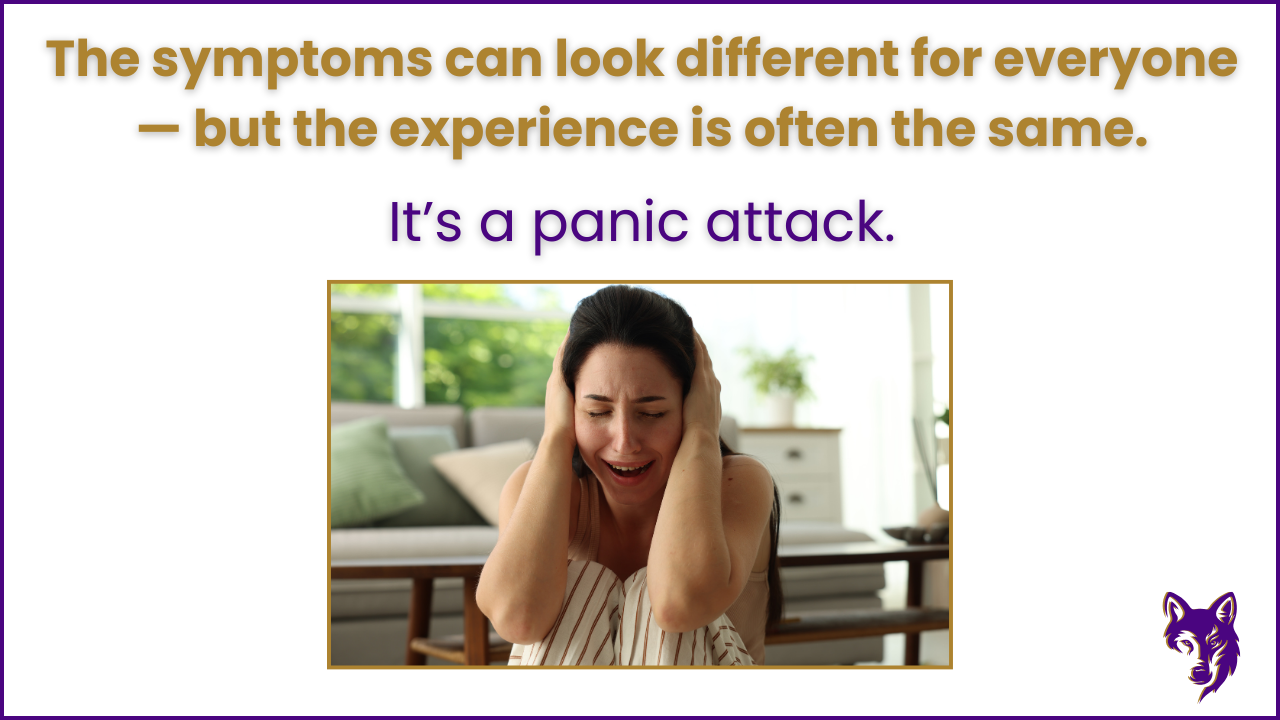
Your heart is racing.
The air feels thick, hard to inhale.
Your legs feel shaky. You’re light-headed.
Your mind is racing. Your chest feels tight.
The symptoms can look different for everyone — but the experience is often the same.
It’s a panic attack.
When Anxiety Feels Like a Medical Emergency
One of the hardest parts of anxiety and panic is not knowing how to interpret what’s happening in your body.
Is this a heart attack?
Is something wrong with my breathing?
Is this a tumor?
Why does my body feel so wrong?
These questions are incredibly common.
And yes — they are get-through-able, even if it doesn’t feel that way in the moment.
The first step is always medical care.
You should absolutely see your doctor, explain all of your symptoms, and follow through with any testing they recommend. Having a provider you trust matters. A yearly physical matters.
And then — once medical causes are ruled out — comes the hardest (and most important) part:
You have to trust that this is anxiety.
That’s difficult, because anxiety is sneaky. One of its favorite tricks is convincing you that something is physically wrong when it’s actually your nervous system misfiring.
Why Anxiety Can Create So Many Physical Symptoms
Anxiety has real physical power.
It can make your heart race, your chest tighten, your throat feel like it’s closing. It can mimic heart attacks, breathing problems, neurological issues, and digestive disorders.
That’s not weakness.
That’s biology.
Your brain’s job is to protect you — and when it thinks you’re in danger, it mobilizes your entire body.
That’s a lot of power.
And the way you regain control over something that powerful isn’t force — it’s knowledge.
When you understand what anxiety can do, it loses some of its grip.
Before You Read the List (Important)
Take a breath with me first.
This list is not here to scare you.
It’s here to normalize what you may already be experiencing.
You do not need to relate to every symptom.
You do not need to check yourself for new ones.
Reading this doesn’t make symptoms appear — anxiety does that all on its own.
Think of this list as a translator, not a threat.
Anxiety Symptoms — Physical
Agitation
Blanching (loss of facial color)
Bloating
Blushing
Body jolts / zaps
Breathing difficulty
Burping
Chest pain
Chest pressure
Chills
Choking sensation
Cold flashes
Cold sweats
Concentration difficulties
Cough
Derealization / depersonalization
Digestive problems
Dizziness
Burning or swelling sensation in the tongue
Difficulty swallowing
Visual floaters
Frequent urination
Esophageal spasms
Exhaustion
Gastrointestinal distress
General malaise (overall ill feeling)
Headaches
Heart palpitations
“Hot brain” sensation
Hot flashes
Hyperventilation
Hyper-vigilance
Insomnia
Light-headedness
Low energy
Lump in throat sensation
Muscle tension
Muscle weakness
Muscle aches and pains
Nausea
Neck tension
Overwhelm
Pins and needles sensations
Shaking
Shallow breathing
Sweating
Tinnitus
Throat tightening
Tunnel vision
Yawning
Anxiety Symptoms — Fear & Thoughts
Fear of losing control
Fear of dying
Fear of passing out
Fear of “going crazy”
Fear of embarrassment or judgment
Fear of impending doom
Fear of being trapped
Fear of being alone
Fear of being in public
What This List Is Meant to Show You
This still isn’t an exhaustive list — anxiety is incredibly creative in how it tries to convince you something is wrong.
But can you see the pattern?
Anxiety’s job is to persuade you that you’re in danger.
And here’s the truth that matters most:
These symptoms are sensations and thoughts — not threats.
You can allow them to rise and fall without obeying them.
You can feel them without fighting them.
You can experience them without letting them derail your life.
That’s not denial.
That’s leadership.
A Steadier Way Forward
You don’t beat anxiety by eliminating symptoms.
You change your relationship with them.
When you stop treating every sensation like an emergency, your brain learns something new:
“Oh. We’re safe.”
And slowly — gently — the system recalibrates.
You already have more power than anxiety wants you to believe.
You’ve got this.
You can do this.
And I’m really glad you’re here.
