
Red light, blue light…
It sounds like a kid’s game.
RED LIGHT!
BLUE LIGHT!
What immediately pops into my Gen-X brain is a chaotic, no-rules backyard battle where kids got absolutely clotheslined in the name of fun. (We were…feral. Let’s be honest.)

But this isn’t a game — and it’s not harmless.
It’s one of the quiet ways many of us are accidentally sabotaging our mental health… without even realizing it.
The Blue Light Conversation (Without the Fear-Mongering)
Blue light has been getting a lot of attention lately, and for good reason. But let’s clear something up first:
Natural blue light from the sun is not the problem.
In fact, it’s essential.
Morning and daytime blue light helps:
Regulate your circadian rhythm
Improve alertness
Support mood and energy
The issue isn’t sunlight — it’s artificial blue light exposure at the wrong time of day.
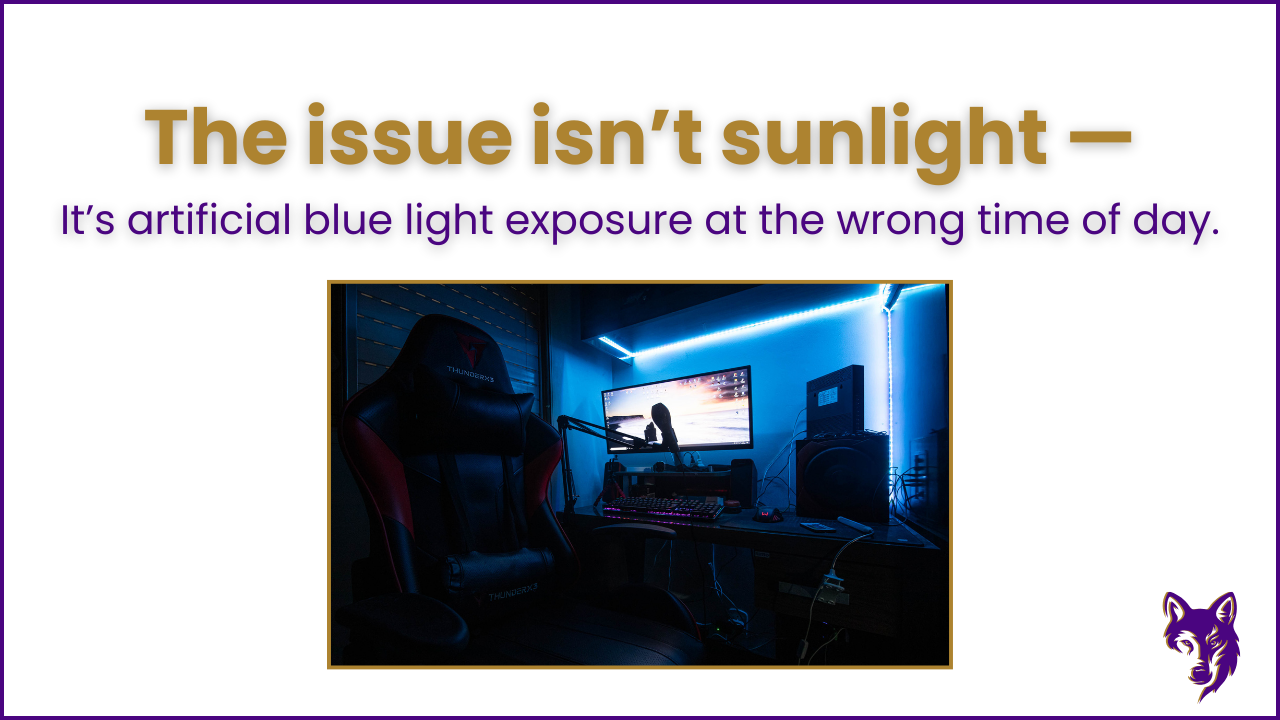
That includes:
Phones
Tablets
TVs
Computer screens
LED and fluorescent lighting
And before we spiral — no, this doesn’t mean screens are destroying your life. Alarmists always take things a step too far.
But… evening blue light does matter. Especially if you have anxiety.
Why Blue Light at Night Hits Anxious Brains Harder
For those of us with anxiety, nighttime blue light can quietly disrupt one of the most important systems in the body: the circadian rhythm.
Your circadian rhythm is your internal clock. It helps regulate:
Sleep and wake cycles
Hormone production
Mood stability
Stress response
Daytime blue light supports this system.
Evening blue light confuses it.
When your brain is exposed to blue light at night, it delays the release of melatonin — the hormone that signals safety, rest, and sleep.
And when sleep is disrupted, the impact goes far beyond feeling tired.
Research discussed by Mental Health America highlights growing concern about the link between increased nighttime lighting and rising rates of mood disorders.
Chronic circadian disruption has been associated with:
Increased anxiety
Depression
Hormonal imbalance
Reduced neuroplasticity (the brain’s ability to adapt and heal)
Long-term health concerns
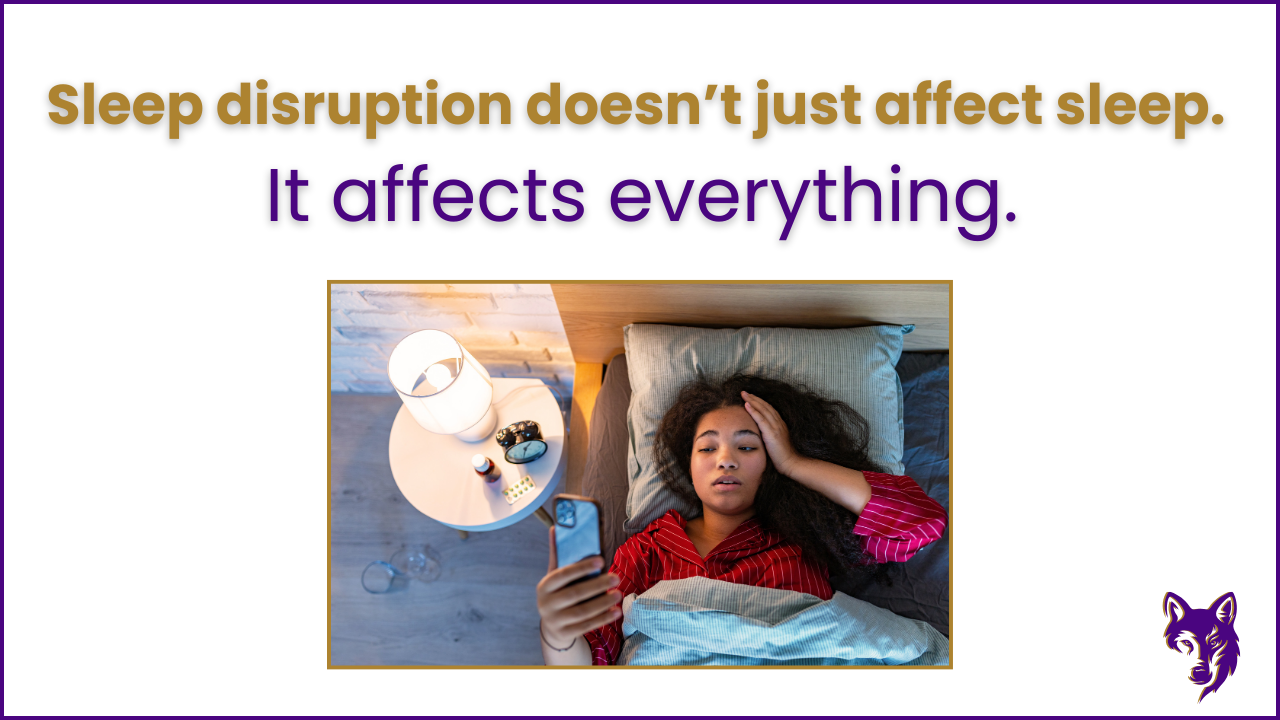
In other words: sleep disruption doesn’t just affect sleep. It affects everything.
Enter: Red Light (Your Nervous System’s Friend)
Here’s the good news.
Red light works with your body, not against it.
Red light exposure in the evening:
Supports melatonin production
Signals safety to the nervous system
Encourages deeper, more restorative sleep
And here’s the coolest part:
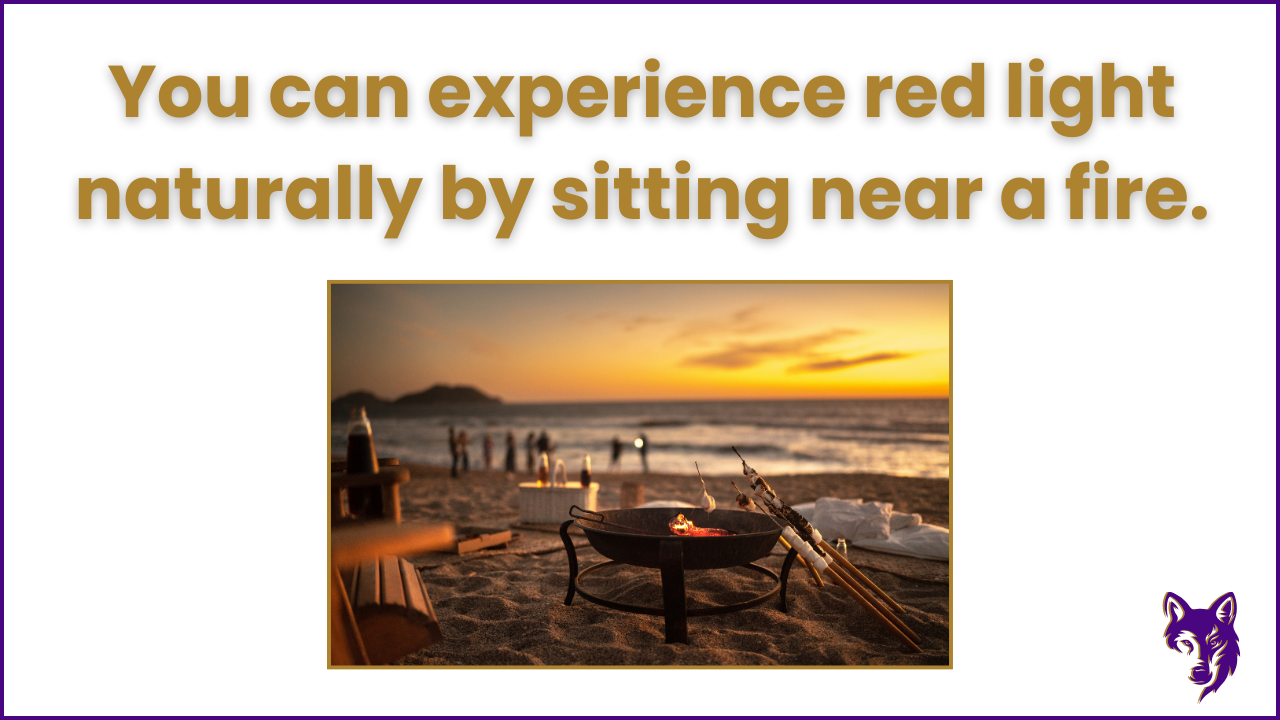
You can experience red light naturally by sitting near a fire.
A crackling fire.
Soft light.
Laughter.
Connection.
You’re telling me something that feels that good also helps sleep?
I’m in.
Real Life Still Counts (And That’s Okay)
Now — I get it. Fires aren’t always practical on busy weeknights. Life happens.
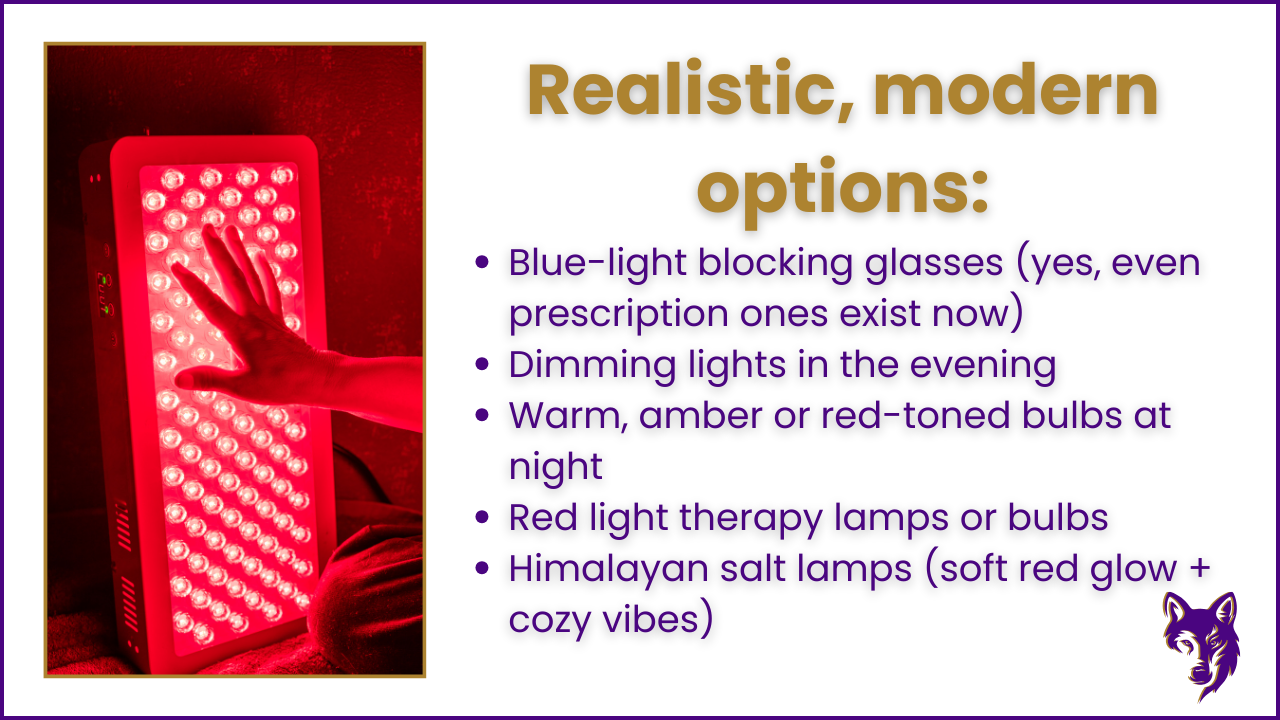
So here are realistic, modern options:
Blue-light blocking glasses (yes, even prescription ones exist now)
Dimming lights in the evening
Warm, amber or red-toned bulbs at night
Red light therapy lamps or bulbs
Himalayan salt lamps (soft red glow + cozy vibes)
And yes — red light therapy has other fascinating benefits too, including wound healing and antibacterial effects. I’m personally intrigued and very here for seeing where the research goes next.
The Bigger Picture
The truth is, natural is always best — but we don’t live in a natural world anymore.
Optimally:
Morning sunlight → absolutely essential
Evening darkness → biologically ideal
Minimal nighttime blue light → supportive for mental health
But since perfection isn’t realistic, balance matters more than rules.
Learning how to gently adjust your environment — especially lighting — is one of the simplest ways to support your nervous system without effort or willpower.
And that matters in a world that already asks too much.
A Gentle Reminder
Get outside in the morning light when you can.
Let your evenings soften.
Dim what doesn’t need to be bright.
Small environmental changes can have surprisingly big effects on anxiety and sleep.
You don’t have to overhaul your life.
You just need to support your system a little more intentionally.
You’ve got this.
You can do this.
And I’m really glad you’re here.
