
If you’ve lived with anxiety for any length of time, chances are you’ve come across the phrase mentally ill somewhere along the way.
It’s common.
Many organizations — and even well-meaning people — use mental illness as a catch-all term that includes anxiety disorders.
And while those words may sound interchangeable, they don’t always feel interchangeable — especially if you live with anxiety, panic, or OCD.
For many people, that label doesn’t feel neutral.
It feels frightening.
Why the Label Can Make Anxiety Worse
Anxiety has a very specific fear baked into it:
What if I’m going crazy?
So when someone who already fears losing control is told they’re “mentally ill,” it can amplify the very worry anxiety thrives on.
Suddenly the fear isn’t just about symptoms — it’s about identity.
And that matters.
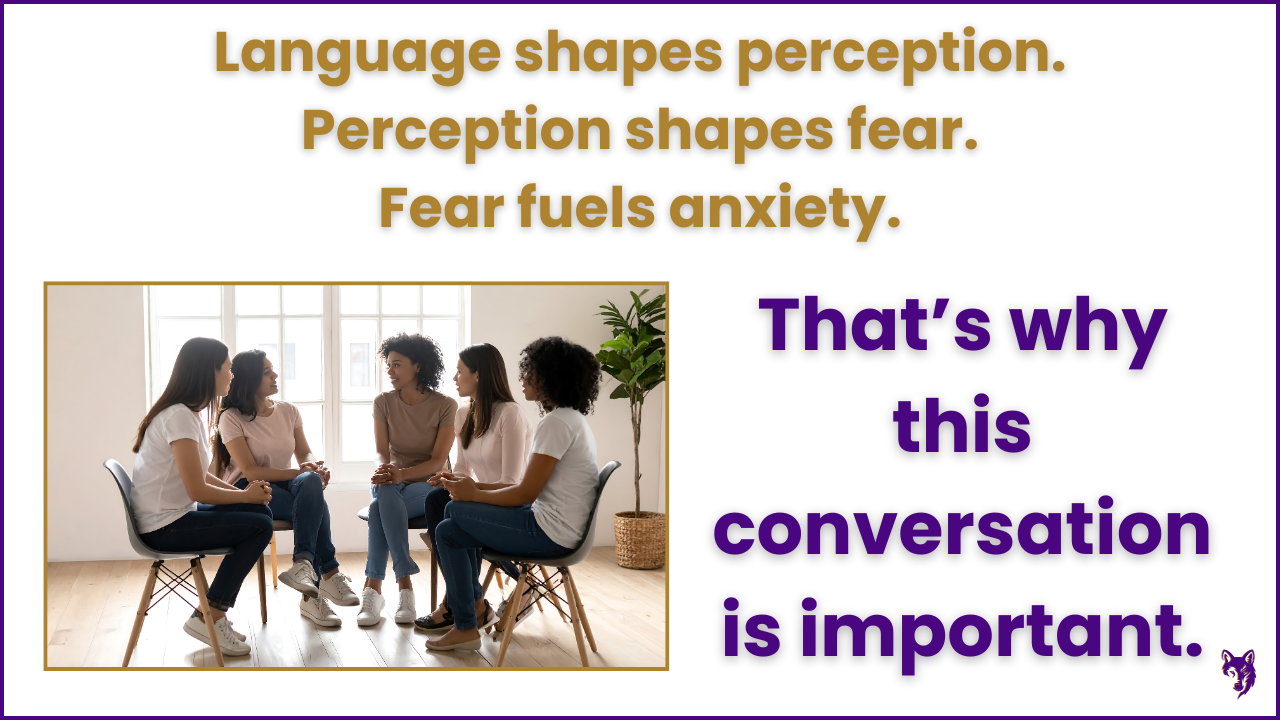
Language shapes perception.
Perception shapes fear.
Fear fuels anxiety.
That’s why this conversation is important.
A Clarifying (and Grounding) Distinction
Here’s the nuance that often gets lost:
“Mental illness” is an umbrella term.
Under that umbrella live many very different experiences — from mood disorders, to psychotic disorders, to trauma-related conditions, to anxiety disorders.
But lumping them all together doesn’t mean they function the same way.
Many psychiatric illnesses involve significant disruptions in perception, cognition, or reality testing — often requiring medication, ongoing clinical care, and structured support.
Anxiety disorders, on the other hand, are typically driven by:
A hyper-reactive nervous system
Threat misinterpretation
Learned fear responses
Protective mechanisms that have gone into overdrive
That doesn’t make anxiety “less real.”
It makes it different.
And difference matters.
Anxiety Is Not “Going Crazy”
One of the most painful parts of anxiety is the fear that you’re losing your mind.
I know that fear well.
Anxiety can create:
Racing, tangled thoughts
Intense physical sensations
A sense of disconnection or unreality
Fear that you won’t “come back” from a spiral
Those experiences are terrifying — but they are not signs of insanity.
They are signs of a nervous system stuck in survival mode.
Even people with serious psychiatric illnesses are not “crazy” — that word is outdated, stigmatizing, and unhelpful. And anxiety disorders do not progress into psychosis or insanity on their own, despite how convincing the fear may feel.
Anxiety lies loudly.
That doesn’t make it true.
My Story (Because I’ve Been There)
My first panic attack sent me straight to the emergency room.
My heart was racing.
I couldn’t breathe.
My thoughts felt like they were colliding inside my head.
I remember looking at myself in the mirror and thinking:
“I think I’m going crazy.”
I wasn’t.
But I spent years afraid I was — especially because I had a family history of severe mental illness. I was convinced anxiety was just the beginning of something much worse.
It wasn’t.
Two decades later, I’m mentally healthier than I was at the start.
Not because anxiety disappeared — but because I learned how to understand it, respond to it, and stop fearing what it meant about me.
And you can, too.
You Get to Choose the Language You Live With
Here’s where I’ll stand firmly with you:
You get to decide how you relate to your anxiety.
If the phrase mental illness feels supportive to you — that’s valid.
If it feels frightening or inaccurate — you’re allowed to reject it.
Labels are tools.
They’re meant to help — not harm.
Anxiety is a manageable, treatable condition, rooted in biology, learning, and nervous system responses — not a personal failure or a loss of sanity.
You are not broken.
You are not losing your mind.
And you are not defined by a label someone else chose for you.

The Truth I Want You to Hold Onto
Anxiety is hard.
It’s unfair.
It can be exhausting and terrifying and isolating.
But it is not a sign that you’re mentally ill in the way anxiety tells you you are.
It’s a condition that can be understood, worked with, and led.
And you don’t have to let fear decide who you are.
You’ve got this.
You can do this.
And I’m really glad you’re here.
