When Everyone Thinks You've Got It Together, but You're Quietly Falling Apart
By Tracy Lynn Gray | The Anxious Alpha™
You know that woman who seems to have everything under control?
She's organized. Dependable. Responsible. She's the one everyone calls when something goes wrong because, somehow, she always knows what to do.
She's got seventeen things on her calendar, forty-three tabs open in her brain, and a mental list of potential disasters that would make an emergency management agency proud.
She's the woman who remembers birthdays, anticipates problems, meets deadlines, and somehow manages to keep everybody else's world spinning.

And people LOVE her for it.
They call her strong.
They call her capable.
They call her dependable.
They say things like, "I don't know how you do it all!"
And she smiles.
Because what else is she supposed to say?
"Well, Susan, I'm actually fueled by caffeine, catastrophic thinking, and the overwhelming fear that if I stop moving, everything will spontaneously burst into flames."
Probably not appropriate conversation for the office Christmas party.

But here's what nobody sees.
The exhaustion.
The constant mental rehearsals.
The inability to relax without feeling guilty.
The way she replays conversations from three days ago, wondering whether something she said sounded stupid.
The way her stomach drops when her phone rings unexpectedly.
The way she lies awake at night thinking about things that haven't happened, might never happen, and, frankly, probably aren't even remotely likely to happen.
From the outside, she's thriving.
On the inside?
She's exhausted.
And the worst part?
She's gotten so good at functioning with anxiety that she doesn't even realize how much it's costing her.
Let's talk about that.
First, What Exactly Is High-Functioning Anxiety?
Let's clear something up right away.
High-functioning anxiety isn't an official mental health diagnosis. It's a term people use to describe a particular experience: someone who's dealing with significant anxiety while still appearing productive, successful, and capable.
And that distinction matters.
Because anxiety doesn't always look like someone hiding under the covers, unable to face the day.
Sometimes anxiety looks like the woman who gets up before everyone else, handles seventeen responsibilities before breakfast, and still feels like she hasn't done enough.
Sometimes it looks like the business owner who triple-checks every email before hitting send.
Sometimes it looks like the mother who can't enjoy a quiet afternoon because she's mentally preparing for everything that could possibly go wrong tomorrow.
And sometimes?
It looks like the woman everyone else turns to for reassurance.
Which is particularly ironic when you consider that she's desperately trying to reassure herself.
High-functioning anxiety can show up as perfectionism, overthinking, people-pleasing, excessive preparation, difficulty resting, and an overwhelming need to stay in control.

But here's where things get tricky.
Many of those behaviors are rewarded.
People praise you for being prepared.
They admire your work ethic.
They appreciate your willingness to help.
They celebrate your attention to detail.
And slowly, without necessarily realizing it, you begin confusing anxiety-driven behaviors with the qualities that make you valuable.
You start believing that being constantly available makes you dependable.
That worrying makes you responsible.
That anticipating every possible problem makes you smart.
That pushing through exhaustion makes you strong.
And before long, you've built an entire identity around never dropping the ball.
Even when you're the one getting crushed underneath it.
The Hidden Cost #1: You're Exhausted, Even When You Haven't Done Anything
Have you ever reached the end of a day and felt completely drained, even though you can't point to anything particularly exhausting that happened?
You weren't moving furniture.
You didn't run a marathon.
You didn't spend six hours wrestling an alligator.
Although, honestly, some family gatherings probably qualify.
You just lived your life.
So why are you so tired?
Because your brain has been working overtime.
When you're constantly scanning for potential problems, anticipating other people's reactions, reviewing past conversations, and planning for every possible outcome, you're using mental and emotional energy.
A LOT of it.
And unlike physical work, mental work doesn't always leave visible evidence.
Nobody looks at you and says, "Wow, you must be exhausted from imagining twelve different ways tomorrow's meeting could go wrong."
But your nervous system doesn't necessarily distinguish between a real threat and a threat you're vividly imagining.

Your body can respond to anxious thoughts with physical stress reactions, even when nothing dangerous is happening in the moment.
And when that happens repeatedly, it can leave you feeling tense, restless, and worn down.
The hidden cost?
You're spending energy surviving situations that haven't even happened.
And sometimes, situations that never will.
What You Can Do
Start noticing when you're mentally rehearsing something instead of actually preparing for it.
There's a difference.
Preparation has an endpoint.
You gather information, make a plan, and take action.
Anxiety-driven rehearsal tends to circle endlessly.
You imagine one possibility.
Then another.
Then another.
Then you revisit the first one because apparently your brain has decided it deserves a sequel.
When you catch yourself doing this, ask:
"Is there something useful I can do about this right now?"
If the answer is yes, identify one action.
If the answer is no, practice allowing the uncertainty to exist without trying to solve it.
You don't have to attend every emergency meeting your brain schedules.
Especially when the emergency hasn't happened.
The Hidden Cost #2: You Can't Enjoy Your Success
This one's particularly sneaky.
You accomplish something wonderful.
You finish a project.
You receive a compliment.
You reach a goal you've worked toward for months.
And for approximately eleven seconds, you feel fantastic.
Then your brain says:
"Okay, but what's next?"
Or worse:
"Yeah, but you could've done better."
Sound familiar?
High-functioning anxiety can make accomplishment feel less like something to celebrate and more like temporary relief from the fear of failure.

You don't necessarily feel proud that you succeeded.
You feel relieved that you didn't mess up.
And those are two very different experiences.
One builds confidence.
The other can reinforce the belief that you must keep performing perfectly to avoid something terrible happening.
So you move the goalposts.
Again.
And again.
And again.
You tell yourself you'll relax when the project is finished.
Then when the next deadline passes.
Then when the house is organized.
Then when everyone else is happy.
Then when Mercury is no longer in retrograde, the laundry is completely finished, and Kevin the squirrel has successfully filed his quarterly paperwork.

Girl.
We're going to be here a while.
What You Can Do
Practice acknowledging your accomplishments before moving on to the next responsibility.
And I don't mean immediately dismissing them with, "It wasn't that big of a deal."
Try saying:
"I worked hard for this, and I'm allowed to enjoy it."
Notice the urge to minimize your achievement.
Notice the discomfort that might come with feeling proud.
And let yourself celebrate anyway.
You don't need to earn permission to appreciate your own progress.
The Hidden Cost #3: Your Relationships Become Another Responsibility
Let's talk about people-pleasing.
Because if high-functioning anxiety had a favorite extracurricular activity, this might be it.
You're the person who says yes when you want to say no.
You apologize when you haven't done anything wrong.
You carefully choose your words to avoid upsetting someone.
You notice subtle changes in people's moods and immediately wonder whether you've caused them.
Someone sends you a text that says, "We need to talk."
And your brain immediately begins preparing your defense for crimes you haven't committed.

Ma'am.
They might just want to discuss Thanksgiving dinner.
But anxiety doesn't always wait for evidence.
And when you're constantly managing other people's feelings, relationships can start feeling less like connection and more like unpaid emotional labor.
You become responsible for keeping everyone comfortable.
Everyone happy.
Everyone reassured.
Everyone okay.
Except you.
Because somewhere along the way, your own needs got pushed to the bottom of the list.
And here's the heartbreaking part.
You can be surrounded by people who love you and still feel incredibly alone when you believe you always have to be the strong one.
What You Can Do
Start practicing small moments of honesty.
You don't have to announce a dramatic personality transformation.
You don't need to gather everyone in the living room and declare that effective immediately, you're resigning from your position as Director of Everybody Else's Feelings.
Although I admit, the resignation letter would be spectacular.
Instead, start small.
Say, "I can't do that today."
Say, "I need some time to think about it."
Say, "I'm actually having a hard day."
And here's the really important part.
Let those statements stand without immediately trying to make everyone else comfortable with them.
Healthy relationships have room for your needs, too.
The Hidden Cost #4: Rest Feels Like Something You're Doing Wrong
Oh, this one.
This one deserves its own support group.
You finally have a free afternoon.
Nothing urgent needs your attention.
Nobody needs you to solve a crisis.
You could sit on the couch, read a book, watch a movie, or just enjoy the silence.
And what happens?
You feel guilty.
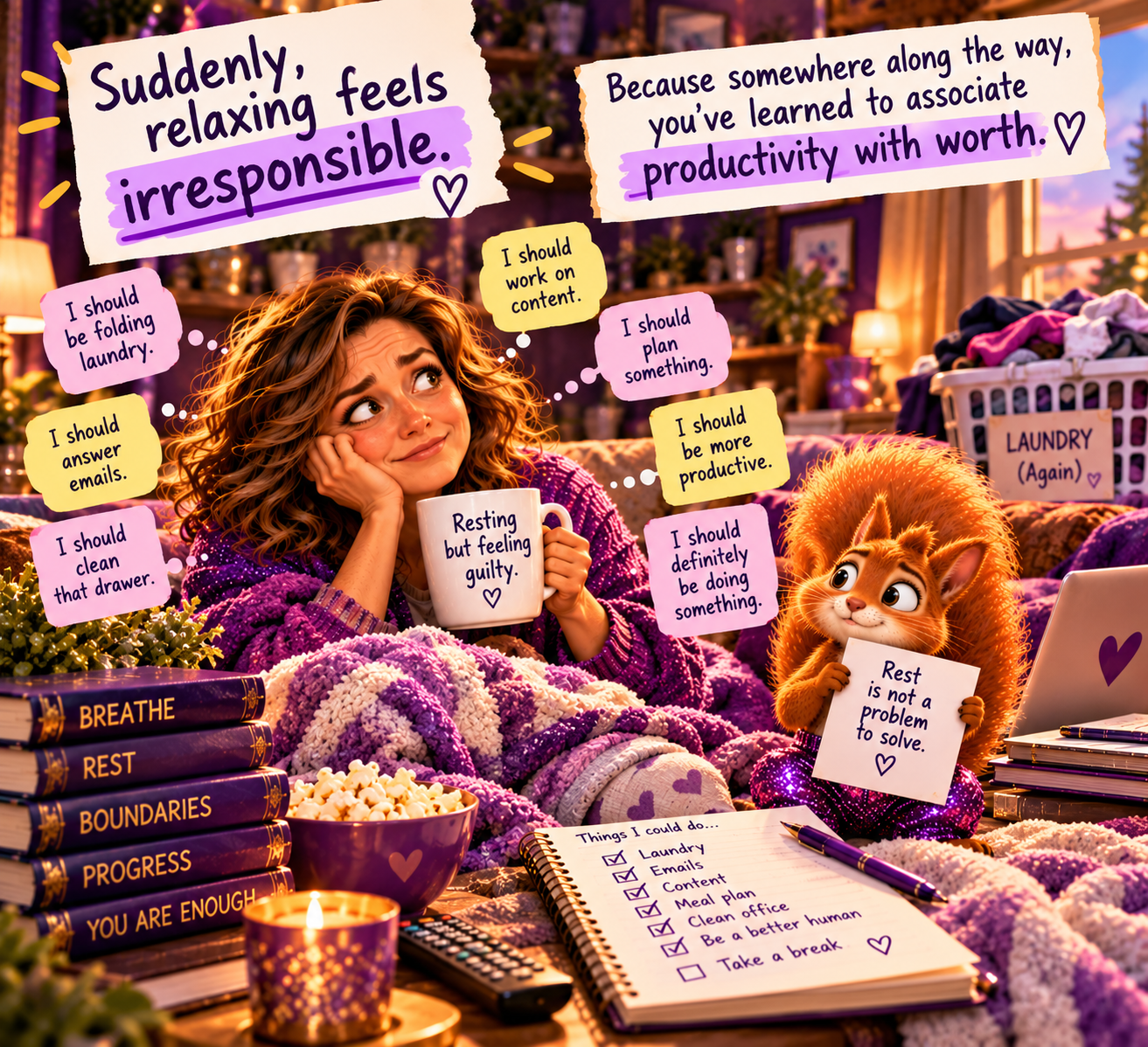
Your brain starts listing everything you could be doing.
The laundry.
The emails.
The closet that hasn't been organized since approximately 2007.
That one drawer in the kitchen containing batteries, expired coupons, mysterious keys, and seventeen pens that don't work.
Suddenly, relaxing feels irresponsible.
Because somewhere along the way, you've learned to associate productivity with worth.
If you're accomplishing something, you're valuable.
If you're helping someone, you're useful.
If you're solving problems, you're needed.
But if you're just sitting there?
Who are you?
And that question can feel surprisingly uncomfortable.
Here's what I want you to understand.
Rest isn't a reward for completing every responsibility. It's a basic human need.
You don't have to finish your entire to-do list before you're allowed to breathe.
And considering that most to-do lists reproduce faster than rabbits, waiting until everything is finished is a terrible strategy.
What You Can Do
Start scheduling small periods of intentional rest.
Not because you've earned them.
Because you need them.
Try ten minutes.
Put your phone down.
Sit outside.
Listen to music.
Drink your coffee while it's still hot.
Revolutionary concept, I know.
And when your brain starts insisting you should be doing something productive, remind yourself:
"Rest is part of taking care of my life, not an interruption to it."
You might feel uncomfortable at first.
That's okay.
You're practicing a different relationship with rest.
The Hidden Cost #5: You Stop Knowing What You Actually Want
This might be the most painful cost of all.
When you've spent years anticipating problems, meeting expectations, managing responsibilities, and keeping everyone else comfortable, something strange can happen.
You lose touch with your own desires.
You know what everyone else needs.
You know what everyone else expects.
You know what would make everyone else happy.
But when someone asks what YOU want?
You freeze.
Not because you don't have dreams.
But because you've spent so long filtering your decisions through other people's needs, expectations, and potential reactions that your own voice has gotten quieter.
Maybe you wanted to start a business.
Write a book.
Travel.
Go back to school.
Change careers.
Try something completely different.
But every time you considered taking a step toward that dream, anxiety had something to say.
"What if you fail?"
"What if people judge you?"
"What if something goes wrong?"
"What if someone needs you?"
"What if you're being selfish?"
And eventually, dreaming itself begins to feel dangerous.
Because wanting something means risking disappointment.
It means facing uncertainty.
It means acknowledging that the life you're living might not be the only life available to you.
So you stop asking what you want.
You focus on what's expected.
What's safe.
What's practical.
What won't upset anyone.
And years can pass that way.
Years.
I want to spend a little extra time here because this isn't just something I've observed.
I know what it's like to build your life around taking care of someone else.
I know what it's like to have responsibilities that are very real, very important, and not something you can simply walk away from.
And I know how anxiety can become tangled up in those responsibilities until you stop being able to tell where genuine obligation ends and fear begins.
At first, you recognize the things you're missing.
You know there are experiences you're postponing and dreams you're setting aside.
But eventually, something shifts.
You stop imagining another possibility.
Not necessarily because you don't want one.
But because wanting one hurts.
And it's easier to stop dreaming than to keep confronting the distance between the life you have and the life you wish you could explore.

But here's what I've learned.
You can love someone deeply AND still have dreams of your own.
You can be responsible AND want freedom.
You can be grateful for your life AND desire something different.
You can care for others AND acknowledge that you matter, too.
Those things aren't contradictions.
They're part of being human.
And if you've spent years putting yourself last, I want you to hear this:
It's not too late to start asking what you want.
Even if you don't know the answer yet.
Even if the question feels uncomfortable.
Even if your dreams look different than they did twenty years ago.
You still get to have them.
What You Can Do
Ask yourself one simple question:
"If I weren't making this decision based on fear, what would I want?"
You don't have to act on the answer immediately.
You don't have to rearrange your entire life by Thursday.
Just allow yourself to consider it.
Because sometimes the first step toward reclaiming your life isn't making a dramatic change.
It's remembering that you're allowed to want something.
The Hidden Cost #6: You Start Believing Anxiety Is the Reason You're Successful
Now THIS is where high-functioning anxiety gets particularly manipulative.
Because after years of worrying, preparing, overthinking, and pushing yourself, you might start believing something dangerous:
"If I stop worrying, I'll stop being successful."
Think about that.
Maybe you've always been the person who catches mistakes before anyone else.
Maybe you're incredibly prepared.
Maybe you're the one who remembers every detail.
Maybe you've accomplished remarkable things while dealing with anxiety.
And somewhere along the way, you've connected those achievements to your constant worrying.
You start believing anxiety is what makes you responsible.
What makes you careful.
What makes you successful.
But let's challenge that idea.
What if your success isn't because you're anxious?
What if you've succeeded because you're intelligent, capable, resourceful, and determined—even while dealing with anxiety?

What if your attention to detail is a genuine strength?
What if your compassion is real?
What if your work ethic belongs to YOU?
What if anxiety has simply convinced you that it deserves all the credit?
Because that's a very different story.
And it's one worth considering.
You don't have to abandon your ambition to experience more peace.
You don't have to stop caring to stop overthinking.
You don't have to become irresponsible to loosen your grip on control.
And you certainly don't have to keep yourself in a constant state of distress to prove you're capable.
Your strengths belong to you. Anxiety doesn't own them.
The Hidden Cost #7: Nobody Realizes You Need Help
There's another consequence of appearing capable all the time.
People assume you're okay.
Because you're getting things done.
You're showing up.
You're handling responsibilities.
You're answering messages.
You're smiling.
You're making jokes.
You're functioning.
And from the outside, everything looks fine.
But functioning isn't the same thing as feeling well.
You can meet every deadline and still be struggling.
You can maintain relationships and still feel overwhelmed.
You can run a business, raise a family, manage a household, and accomplish impressive things while privately experiencing significant anxiety.
And because you're so good at appearing okay, people might not realize how much support you need.
Sometimes you might not even recognize it yourself.

You tell yourself you're just stressed.
Just tired.
Just going through a busy season.
But that busy season has been going on since 2014, and at some point, we might need to reconsider the terminology.
Here's the thing.
You don't have to reach a breaking point before you're allowed to ask for help.
You don't have to wait until you can't function.
You don't have to prove that things are bad enough.
If anxiety is affecting your sleep, relationships, health, peace of mind, or ability to enjoy your life, that's worth taking seriously.
Talking with a licensed mental health professional can help you understand what's happening and develop strategies for managing anxiety.
And seeking support doesn't diminish your strength.
It means you're taking your well-being seriously.
So, How Do You Start Breaking the Cycle?
You don't have to completely reinvent your personality.
You don't have to abandon your responsibilities.
And you don't have to become someone who wanders through life without a plan, a calendar, or a functioning smoke detector.
We're not aiming for chaos here, ladies.
We're aiming for freedom.
The goal isn't to stop caring.
It's to stop treating every uncertainty like an emergency.
The goal isn't to stop being responsible.
It's to recognize that responsibility doesn't require constant worry.
The goal isn't to stop achieving.
It's to learn how to experience your accomplishments without immediately demanding more from yourself.
And the goal certainly isn't to stop being strong.
It's to discover that strength can include rest, boundaries, vulnerability, and asking for help.

Start paying attention to the moments when anxiety is making decisions for you.
When you say yes because you're afraid someone will be disappointed.
When you keep working because resting makes you uncomfortable.
When you overprepare because you're terrified of making a mistake.
When you dismiss your accomplishments because they don't feel good enough.
When you silence your own desires because someone else might not approve.
You don't have to change everything at once.
Just begin noticing.
Then practice making one small choice from a different place.
Not fear.
Not guilt.
Not the desperate need to control every possible outcome.
But intention.
Self-respect.
And the growing belief that your needs matter, too.
Because they do.
💜 Q&A: Let's Talk About High-Functioning Anxiety
Q: Is high-functioning anxiety a real anxiety disorder?
High-functioning anxiety is a commonly used term, but it isn't an official clinical diagnosis.
It describes people who experience anxiety while continuing to manage responsibilities and appear successful or productive.
Some people who identify with the term may meet the criteria for an anxiety disorder, such as generalized anxiety disorder, while others may not.
A qualified mental health professional can help determine whether your symptoms meet diagnostic criteria and what kind of support might help.
Q: Can you have high-functioning anxiety and not realize it?
Absolutely.
When certain patterns have been part of your life for years, they can start feeling normal.
You might assume everyone mentally rehearses conversations, struggles to relax, or feels responsible for preventing every possible problem.
And because you're still functioning, you may not recognize those patterns as signs of anxiety.
That's why awareness matters.
Sometimes you don't realize how much mental energy you're spending until you begin paying attention to it.
Q: Is high-functioning anxiety the same thing as perfectionism?
Not exactly, although they can overlap.
Perfectionism often involves setting extremely high standards and being overly critical of mistakes.
Anxiety can contribute to perfectionistic behavior when someone fears judgment, failure, rejection, or negative consequences.
But not everyone who's perfectionistic experiences significant anxiety, and not everyone with anxiety struggles with perfectionism.
Q: Why do I feel anxious when everything is going well?
Because anxiety doesn't always respond to what's happening around you.
Sometimes it's driven by anticipation, uncertainty, learned patterns, or a nervous system that's become accustomed to staying on alert.
You might find yourself waiting for something to go wrong because calm feels unfamiliar.
That doesn't mean something bad is coming.
It means your mind may be interpreting uncertainty as something that requires attention.
And learning to tolerate that uncertainty can be an important part of managing anxiety.
Q: Can high-functioning anxiety lead to burnout?
It can contribute to chronic stress and exhaustion, particularly when anxiety drives someone to overwork, neglect rest, or take on excessive responsibilities.
Burnout is most commonly discussed in the context of chronic workplace stress, but prolonged strain can affect many areas of life.
If you're feeling persistently exhausted, emotionally depleted, or unable to recover with ordinary rest, it's worth exploring what's contributing to those feelings.
Q: How do I stop feeling guilty when I rest?
Start by recognizing that guilt doesn't automatically mean you're doing something wrong.
Sometimes it means you're doing something unfamiliar.
If you've spent years connecting productivity with worth, resting may feel uncomfortable.
Begin with small periods of intentional rest.
Notice the guilt without automatically obeying it.
Remind yourself that your body and mind need recovery.
And practice allowing yourself to rest even when your to-do list isn't finished.
Because, seriously, that list is NEVER going to be finished.
Q: Do I have to stop being ambitious to overcome anxiety?
Absolutely not!
You can be ambitious, successful, driven, and deeply committed to your goals without relying on fear as your primary source of motivation.
In fact, learning to manage anxiety may help you pursue your goals with greater clarity, flexibility, and enjoyment.
The goal isn't to make you less capable.
It's to help you experience your capabilities without paying such a high emotional price.
⭐ Courage Challenge of the Week ⭐
Stop Proving. Start Living.
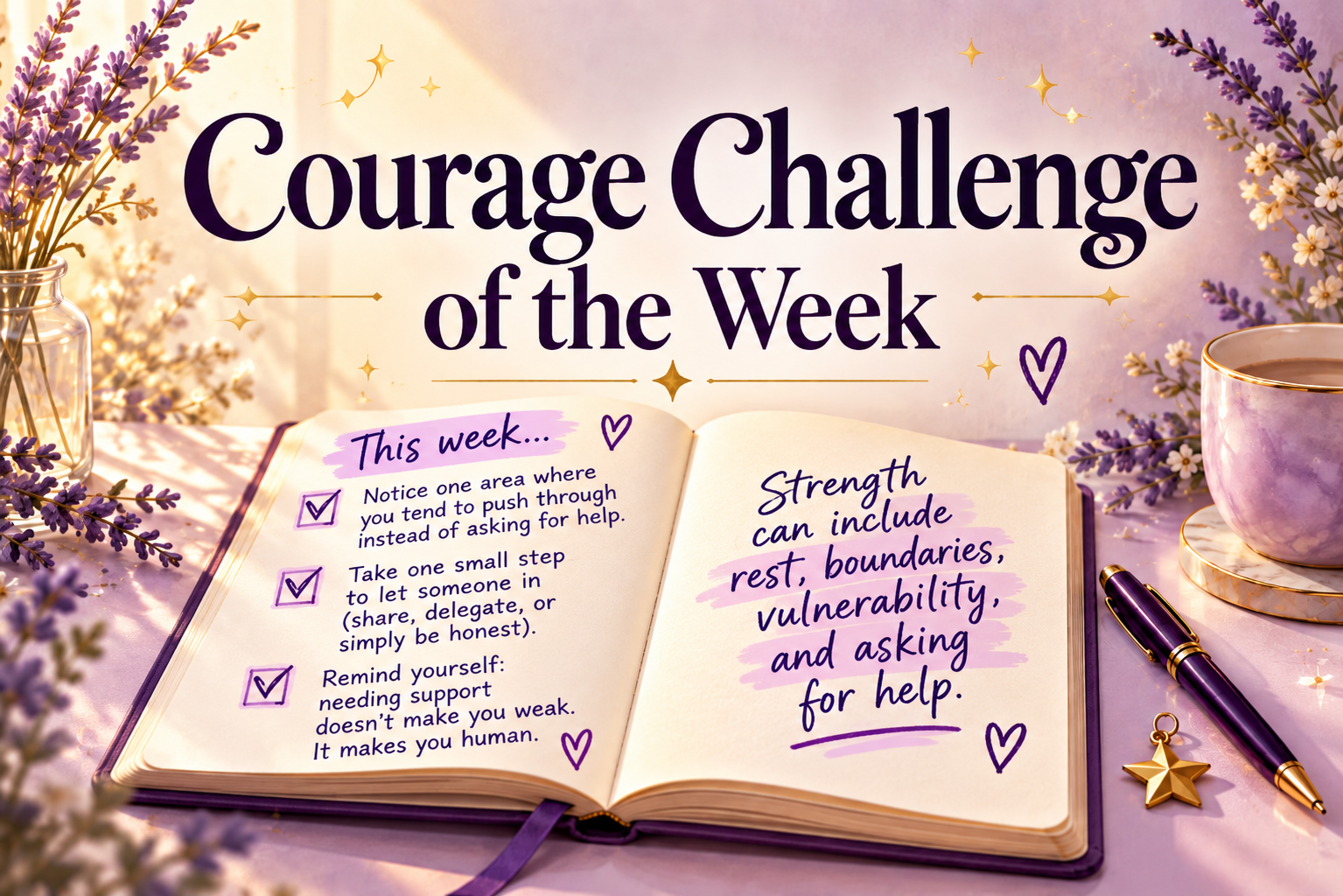
This week's challenge is about doing something that might feel surprisingly uncomfortable.
Choose ONE thing you normally do because anxiety tells you that you have to—and practice doing it differently.
Maybe that means leaving a nonurgent email unanswered until tomorrow.
Maybe it means saying no without writing a seventeen-paragraph explanation.
Maybe it means taking thirty minutes to relax without trying to justify it.
Maybe it means submitting something that's good enough instead of revising it for the forty-third time.
Maybe it means asking someone else for help.
Or maybe it means sitting quietly for ten minutes and asking yourself what YOU want.
Not what everyone else needs.
Not what you're supposed to want.
Not what would be easiest for everyone around you.
What YOU want.
And here's the important part.
You might feel uncomfortable.
You might feel guilty.
Your brain might immediately produce a PowerPoint presentation explaining why this is a terrible idea.
Thank you, Kevin. Your concerns have been documented.
But discomfort doesn't automatically mean you're making a mistake.
Sometimes it means you're challenging a pattern that's been running your life for years.
Your challenge isn't to eliminate the anxiety.
It's to practice making one small decision without letting anxiety have the final vote.
And when you do?
Give yourself credit.
Not because the action was necessarily enormous.
But because you chose something different.
And different is where change begins.
💜 Final Thoughts: You Were Never Meant to Just Hold Everything Together
I want to leave you with something.
Being the strong one can become a lonely place.
Especially when everyone assumes you've got everything handled.
Especially when you're the person who solves problems, manages crises, remembers details, and keeps life moving.
Especially when you've gotten so good at pushing through anxiety that you've forgotten what it feels like to move through life without constantly bracing for impact.
But here's what I hope you'll begin to understand.
You weren't put on this earth simply to manage responsibilities and prevent disasters.
You were made for more than getting through the day.
More than meeting expectations.
More than making everyone else comfortable.
More than checking boxes and collapsing into bed, only to wake up and do it all again.
You were made to experience your life.
To laugh.
To dream.
To explore.
To create.
To rest.
To love.
To discover who you are when you're not busy being everything everyone else needs.
And I know that might feel overwhelming.
Especially if you've spent years believing your value comes from how much you accomplish or how much you do for other people.
But you don't have to earn your place in this world through exhaustion.
You don't have to prove your worth by carrying everything alone.
And you don't have to keep sacrificing your peace to maintain the appearance that you've got it all together.
You can be capable AND need support.
You can be ambitious AND need rest.
You can be dependable AND have boundaries.
You can be strong AND admit you're struggling.
And you can love the people in your life with your whole heart AND still make room for the life you want to live.

Because here's the truth, my friend.
The goal was never to become so good at functioning with anxiety that nobody notices you're struggling.
The goal is to build a life where you're not constantly struggling just to function.
A life where success doesn't require self-abandonment.
Where responsibility doesn't mean relentless worry.
Where peace isn't something you keep promising yourself you'll experience someday.
And where you finally understand that you matter just as much as everyone you've spent your life taking care of.
So this week, I hope you'll do something a little different.
Stop asking yourself how much more you can carry.
Start asking yourself what you might finally be ready to put down.
Because you don't have to hold the entire world together to deserve a beautiful life.
You deserve to actually LIVE it.
And Alpha?
Brave Looks Good on You. 💜
Tracy Lynn Gray is an author, speaker, and founder of The Anxious Alpha™, helping women navigate anxiety, overwhelm, and the challenges that keep them from moving forward. Through practical tools, honest conversations, and a healthy dose of humor, she encourages women to stop shrinking, reclaim their confidence, and start living more courageously—one small step at a time.
This article is for educational purposes and isn't a substitute for professional mental health care.